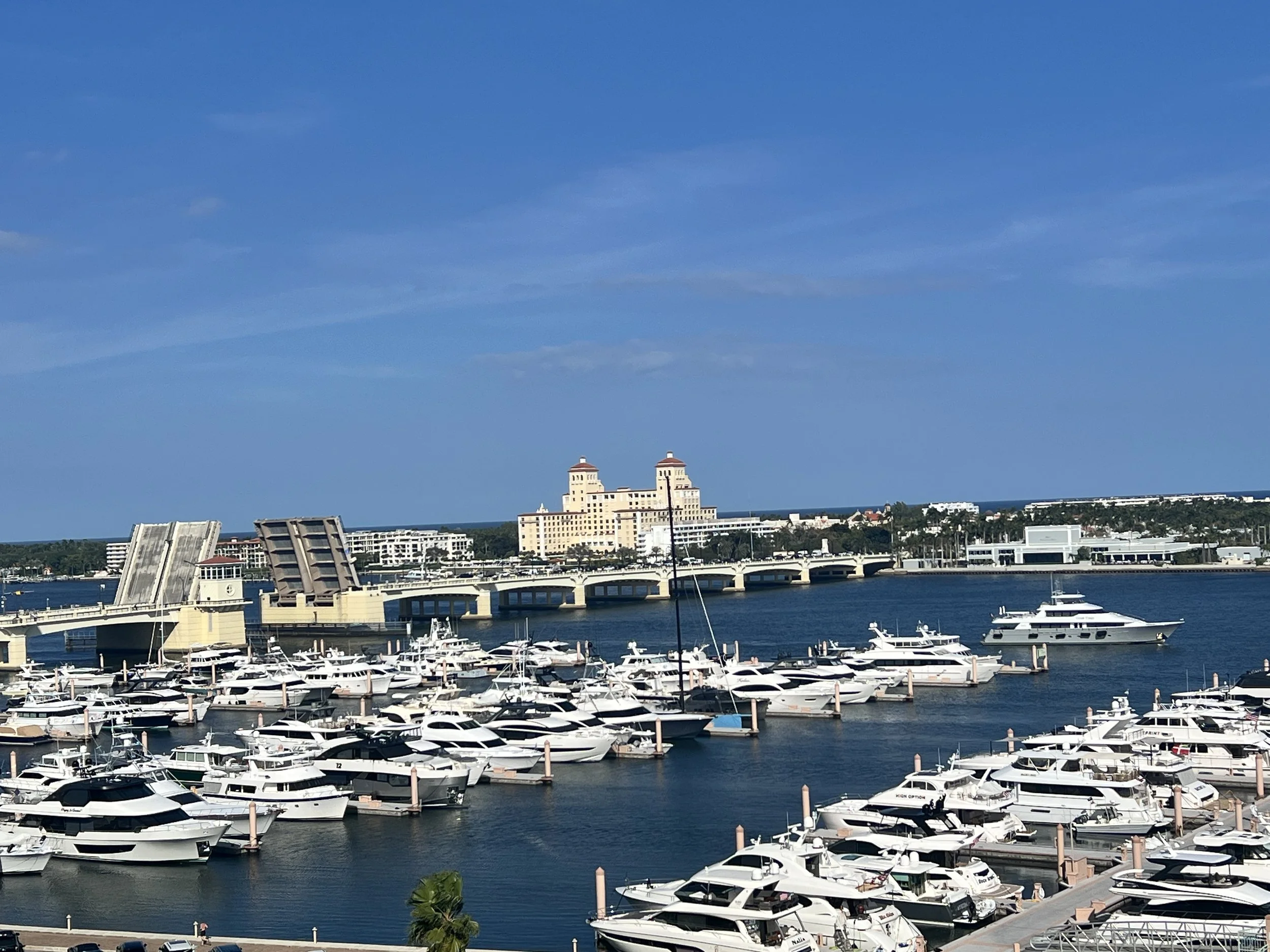
For a place so famous, Palm Beach can be surprisingly difficult to define.
Ask someone where they live and they’ll say Palm Beach. Ask where they’re having dinner and they’ll say Palm Beach. Ask where they’re spending the winter and they’ll say Palm Beach.
The problem is they may be talking about entirely different places.
For newcomers, the distinction isn’t always obvious. Palm Beach can refer to a barrier island, an entire county, a collection of coastal communities, or something less tangible altogether. Sometimes it seems to describe a lifestyle as much as a location.
Understanding the difference is useful. Understanding why the distinction matters is even more interesting.
Palm Beach Island
When locals say they’re “going to Palm Beach,” they’re often referring to Palm Beach Island.
The island sits just east of West Palm Beach and is home to many of the landmarks that have made Palm Beach famous: Worth Avenue, The Breakers, historic architecture, oceanfront estates, and a social calendar that draws visitors from around the world.
Despite its outsized reputation, Palm Beach Island is surprisingly small. You can drive its length in a matter of minutes.
Yet for many people outside South Florida, this small barrier island is what comes to mind when they hear the words Palm Beach.
The Palm Beaches
The Palm Beaches is a tourism term designed to describe a much larger region.
It includes dozens of communities spread throughout Palm Beach County, including Jupiter, Palm Beach Gardens, Juno Beach, Wellington, Delray Beach, Boca Raton, and many others.
The phrase exists because visitors often arrive expecting a single destination and discover a collection of very different places instead.
A day spent in Jupiter feels different from a day spent on Palm Beach Island. Wellington has its own identity. So does Juno Beach. Geography connects them. Culture often separates them.
Palm Beach County
Palm Beach County is the official governmental designation.
It’s one of Florida’s largest counties and encompasses everything from barrier islands and waterfront communities to equestrian estates, agricultural land, and growing suburbs.
Many people who casually say they live in Palm Beach actually live somewhere else within Palm Beach County.
The distinction rarely matters until it does.
Why This Confuses So Many People
The confusion exists because Palm Beach operates as both a place and a brand.
To someone visiting from Chicago, New York, or Dallas, Palm Beach often represents an idea: sunshine, oceanfront living, social season, golf courses, beautiful homes, and a certain version of Florida.
Locals tend to be more precise.
Palm Beach Island is not Jupiter.
Jupiter is not Palm Beach Gardens.
Palm Beach Gardens is not Wellington.
A short drive can produce a remarkably different experience.
The names may share a county. The communities often share very little else.
The Difference That Matters
The most surprising discovery isn’t geographic.
It’s that Palm Beach isn’t a destination at all.
It’s a collection of destinations.
Before spending time here, it’s easy to imagine Palm Beach as a singular place with a singular identity. In reality, the region is a patchwork of communities, each with its own rhythm, personality, and sense of place.
Palm Beach Island may be the most famous part of the story.
It is not the entire story.
And understanding that distinction is often the first step toward understanding South Florida itself.